


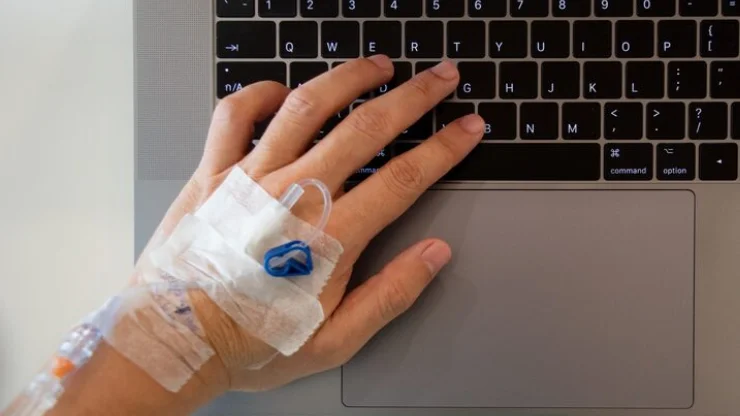
Managing wound care patients is already demanding work. Add complex Medicare billing rules, strict documentation requirements and a growing audit environment. The margin for error becomes razor-thin fast.
Wound care practices operate in one of the most compliance-heavy billing landscapes in healthcare. Without the right wound care management software and expert billing support, revenue slips away quietly, claim after claim.
Why Wound Care Billing Breaks Down Fast
Wound care is not a simple billing specialty. Every treatment stacks multiple coding layers: CPT procedure codes, HCPCS Q-codes for skin substitutes, ICD-10 diagnosis codes, LCD compliance requirements, prior authorization documentation. Miss one piece, the claim fails.
CMS tightened skin substitute documentation significantly in 2026. Product-level data must now appear in CMS-1500 Field 19. Practices relying on generalist EHRs or non-specialist billing teams are walking into denials without realizing it.
The 2026 OPPS Final Rule also reclassified skin substitute products, separating product payment from procedure payment entirely. Billing logic that worked two years ago may now generate underpayments or outright rejections.
What Good Wound Care Software Actually Does
The best wound care software is not just a documentation platform. It is a clinical and financial system that keeps clinicians accurate, claims clean, the revenue cycle moving without bottlenecks.
Clinical Documentation That Holds Up
Strong wound care management software handles wound staging, point-of-care photo capture, automated measurements, healing trajectory charting, care plan updates in real time. Everything is recorded where the clinician is working, not added later from memory.
Structured templates built around wound-specific workflows help staff document consistently. That consistency matters when payer audits arrive and incomplete records become denial triggers.
Automated Billing and Coding
Wound care medical billing software connects clinical records directly to billing output. Procedure codes generated from treatment documentation. Modifier logic applies automatically for repeat debridements and graft applications.
Practices leveraging AI-driven automation in wound care revenue cycle management are already ahead, processing clean claims faster with fewer manual errors at every step.
Features That Separate Good From Generic
Not every wound care platform delivers the same results. Here is what high-performing systems carry that generic tools do not:
| Feature | Why It Matters |
| Automated CPT and HCPCS coding | Cuts manual errors, reduces denial rates |
| ICD-10 staging and diagnosis mapping | Supports LCD compliance and audit readiness |
| Mobile point-of-care photo capture | Speeds wound tracking without extra patient visits |
| EHR and RCM system integration | Creates unified data flow across clinical and billing teams |
| Outcomes analytics dashboards | Powers MIPS reporting and value-based care preparation |
| Prior authorization tracking | Prevents delays on biologics and high-cost skin grafts |
Practices using specialist wound care billing systems report denial rates of 8 to 12 percent. Generalist setups routinely see 20 to 35 percent.
The Real Cost of Getting It Wrong
When wound care billing lacks the right tools and expertise, the revenue impact shows up fast:
- Claims denied for missing product-level documentation
- Skin substitute Q-codes miscoded or omitted entirely
- Debridement and graft procedures underbilled due to modifier errors
- MAC audits flagging overutilization patterns or documentation gaps
- Reimbursement arriving late, sometimes not at all
Practices dealing with these patterns often do not trace them back to billing process gaps. Collections fall month after month while the actual root cause stays unaddressed.
Understanding how ICD-10 codes apply to wound diagnoses is a critical first step. Accurate diagnosis mapping directly affects whether a claim clears LCD criteria on first submission.
Need Help with Wound Care Billing?
Book a free consultation to simplify your billing, speed up reimbursements, and cut down denials.
TALK TO AN EXPERTWhy a Specialist Billing Partner Matters
General billing teams understand medical billing broadly. That is not enough for wound care. A specialist partner brings:
- Familiarity with Medicare LCDs and NCCI edits specific to wound care
- Expertise in prior authorization for cellular tissue products
- Modifier-specific coding for debridements, grafts, repeat procedures
- Denial pattern tracking to prevent recurring revenue loss
Practices that work with billing specialists recover faster, submit cleaner claims, spend far less internal time managing billing errors or appeals. The financial gap between generalist and specialist billing is measurable from the very first billing cycle.
How Medlife MBS Handles Wound Care Billing
Medlife MBS wound care billing services cover the full scope of wound care revenue cycles. The team manages CPT and HCPCS coding, prior authorization, LCD compliance verification, complete claim submission from intake to payment.
Where most billing operations struggle with wound care claims, the denial management process at Medlife MBS goes further. It does not just appeal rejections. It identifies patterns, closes gaps at the source, prevents the same errors from repeating in the next billing cycle.
Wound care practices have used this support to stabilize collections, reduce claim rework, maintain cleaner audit documentation without adding internal billing staff.
The Bottom Line
Wound care is a high-stakes specialty. It demands precise documentation, clean coding, billing that connects directly to clinical reality. In 2026, with audit pressure growing and CMS rules tightening, practices cannot afford generalist tools or non-specialist billing support.
The right combination of best wound care software and expert billing services is what keeps a wound care practice financially stable, compliant and built for the long term.