

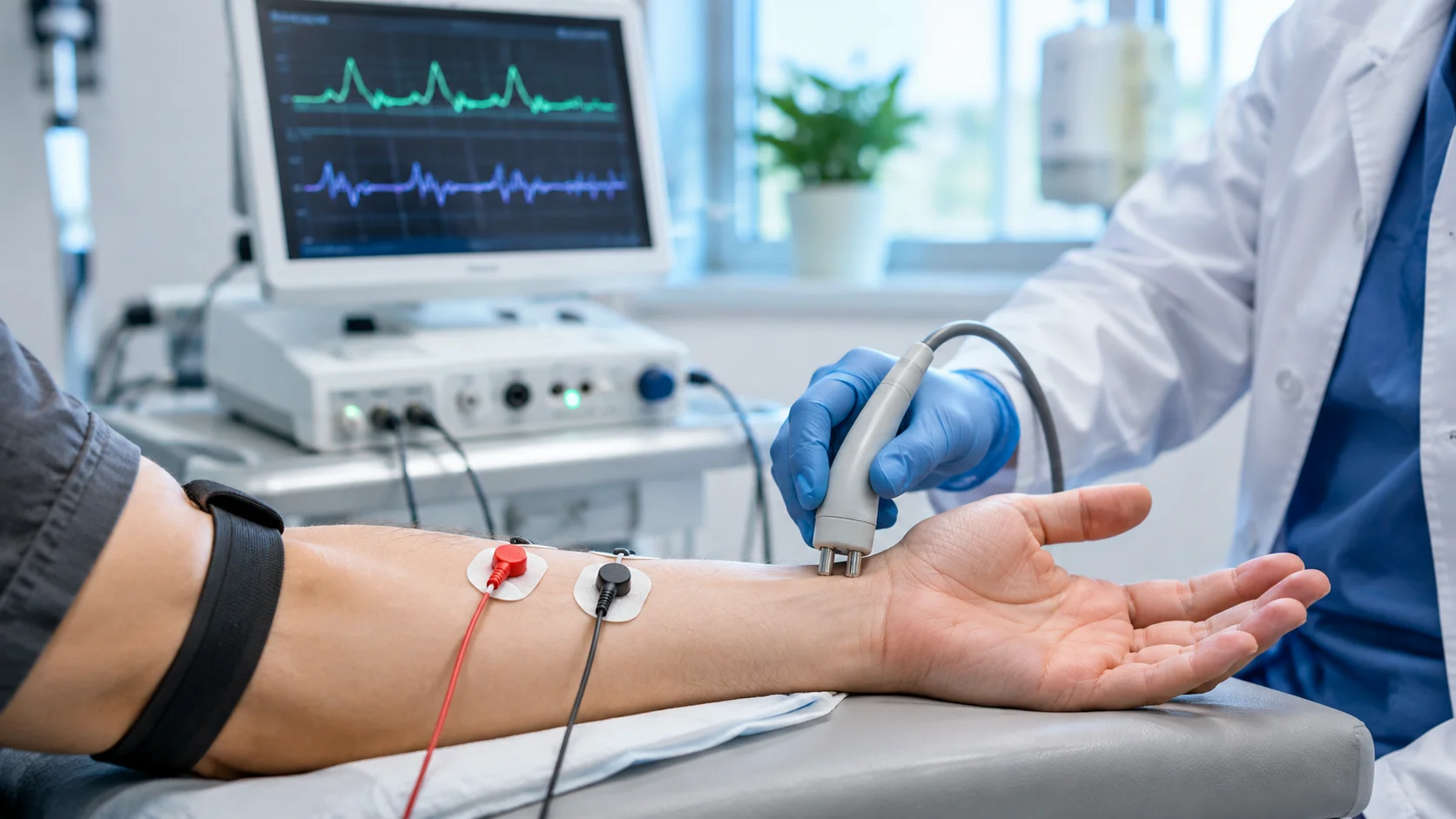
A neurologist performs nerve conduction studies and a needle EMG on the same patient during one visit. The claim reports a limb EMG code next to the nerve conduction code. The payer then denies the nerve conduction study. No modifier can reverse that edit. Errors of this kind make electrodiagnostic testing one of the most frequently denied service lines in neurology.
Nerve conduction study CPT codes follow counting rules that differ from most other diagnostic tests. The CY 2027 Physician Fee Schedule final rule, released on November 4, 2026, lowers the Medicare conversion factor to $32.63 from $33.4009, a reduction of 2.31% that takes effect on January 1, 2027. Each coding error on these studies now costs practices a larger share of an already reduced payment.
2027 Payment Updates Affect Every NCS Claim
The nerve conduction study code family has remained structurally stable since 2013, when CMS and the AMA replaced the older per-nerve codes with codes based on the total number of studies. The current updates are payment changes rather than code changes. The lower 2027 conversion factor reduces payment for every nerve conduction study CPT code, including the professional and technical components.
The 2027 final rule also begins a practice expense overhaul that phases out the indirect practice cost index. Diagnostic services with significant equipment and staff costs, including electrodiagnostic testing, may see their practice expense values shift as that change is implemented. CMS also updates NCCI edits and Medically Unlikely Edits each quarter. Practices should confirm current edits before each new quarter begins.
Choosing the CPT Code: Nerve Conduction Study Counts
Nerve conduction studies are reported with a single code from 95907 through 95913. The code is chosen by the total number of studies performed during the session, not by the number of limbs tested. Only one nerve conduction study CPT code may be reported per patient per day. Adding units for extra stimulation sites on the same nerve is not appropriate.
| CPT Code | Number of Nerve Conduction Studies | Common Clinical Use |
|---|---|---|
| 95907 | 1 to 2 studies | Focused screening of a single nerve |
| 95908 | 3 to 4 studies | Limited evaluation of one limb |
| 95909 | 5 to 6 studies | Carpal tunnel or ulnar neuropathy workup |
| 95910 | 7 to 8 studies | Single-limb radiculopathy evaluation |
| 95911 | 9 to 10 studies | Two-limb comparison studies |
| 95912 | 11 to 12 studies | Suspected polyneuropathy |
| 95913 | 13 or more studies | Extensive multi-limb evaluation |
Each type of study is counted once per nerve, even when multiple sites on that nerve are stimulated. A motor study and a sensory study on the same nerve count as two studies. A motor study performed with an F-wave on the same nerve counts as one study. An H-reflex study counts as its own study. CPT Appendix J lists the qualifying nerves and the maximum number of studies typically needed for each indication.
Same-Day EMG Requires the Add-On Codes
When a needle EMG is performed on the same day as nerve conduction studies, the needle portion is reported with add-on codes rather than the standalone limb EMG codes. The add-on codes are reported in addition to the primary NCS code:
- 95885 for a limited needle EMG of one extremity, reported per limb
- 95886 for a complete needle EMG of one extremity, reported per limb
- 95887 for needle EMG of non-extremity muscles, such as cranial nerve or thoracic paraspinal muscles
The standalone limb codes 95860 through 95864 and 95870 apply only when no nerve conduction study is performed that day. Reporting 95860 through 95864 with an NCS code causes the NCS line to deny under NCCI edits. Those edits do not permit a modifier override. The claim must be corrected and resubmitted.
Limited and Complete EMG Have Defined Thresholds
The choice between 95885 and 95886 depends on the extent of the examination in each limb. The AANEM defines a complete limb study as testing at least five muscles innervated by three or more nerves or four or more spinal levels. An examination that does not meet that threshold is reported as limited with 95885.
Documentation should list each muscle examined so the count can be verified during review. A practice that routinely reports 95886 with fewer than five muscles documented faces recoupment risk on every affected claim. Coders reviewing these encounters benefit from a clear picture of the other neurology CPT codes that often appear on the same date of service.
MUE Limits Cap Units Per Day
Medically Unlikely Edits set the maximum units a payer will accept for each code on a single date of service. Codes 95907 through 95913 and 95887 are limited to one unit per day. Codes 95885 and 95886 allow up to four units, matching the maximum of four extremities. The MUEs for these codes carry an adjudication indicator that blocks appeal of units denied above the limit.
Need Help with Neurology Billing Management?
Book a free consultation to simplify your billing, speed up reimbursements, and cut down denials.
TALK TO AN EXPERTMedicare LCDs Set Documentation and Frequency Rules
Medicare Administrative Contractors publish local coverage determinations for electrodiagnostic testing, including L35081 from Novitas and L35048 from Palmetto GBA. These policies differ by jurisdiction. Common requirements include the following:
- Real-time performance and interpretation of NCS and needle EMG on site
- A documented indication and diagnostic impression for each study
- A record of the nerves and muscles tested with the findings for each
- The normal value ranges for the equipment used
- Frequency limits, commonly two studies per 12 months per diagnosis per provider
Studies that exceed the CPT Appendix J maximums for the stated indication are typically denied. These requirements explain many of the neurology denial trends that practices see on diagnostic claims.
Professional and Technical Components Must Be Split
Electrodiagnostic codes include both a professional component and a technical component. When the study is performed in a physician-owned office, the practice reports the global code. When the study takes place in a hospital outpatient department, the physician reports only the professional component with modifier 26.
Accurate place of service codes are essential for electrodiagnostic claims. An office POS reported for a hospital-based study overstates payment and creates overpayment exposure. Practices that perform studies at more than one location should map each site to its correct component and POS combination.
Diagnostic tests cannot be billed as incident-to services. Professional medical coding services review study counts against Appendix J and MUE limits before claims leave the practice.
Final Thoughts
Nerve conduction study CPT codes reward precise counting and penalize assumptions about which codes belong together. Medlife MBS reviews electrodiagnostic documentation, applies current NCCI and MUE edits and confirms LCD requirements before each claim is submitted. Through specialized neurology billing services, Medlife MBS helps neurology practices collect full payment for diagnostic testing as Medicare rates decline in 2027. Contact the Medlife MBS team to schedule a review of current electrodiagnostic billing.